Tenue de Livres à Distance : Tout ce que Vous Devez Savoir

Fonctionnement, sécurité des données et avantages concrets de la comptabilité dématérialisée pour les PME canadiennes.
La Révolution de la Comptabilité Dématérialisée
Fini le temps des boîtes à chaussures remplies de reçus froissés. La tenue de livres à distance repose sur le partage numérique sécurisé de pièces justificatives en temps réel.
Ce modèle permet aux entrepreneurs de collaborer avec les meilleurs spécialistes comptables sans contrainte géographique.
Comment Fonctionne la Collaboration Virtuelle ?
Les opérations bancaires sont importées automatiquement via des passerelles bancaires encryptées. Vos factures et reçus sont téléversés en quelques secondes depuis votre téléphone ou boîte courriel.
Votre aide-comptable dédié vérifie, catégorise et concilie chaque transaction avec précision.
- Zéro déplacement requis : échanges 100 % en ligne simples et efficaces.
- Accès en direct à des états financiers clairs et à jour sur votre tableau de bord.
- Chiffrement bancaire de pointe pour protéger la confidentialité de vos données.
- Sauvegardes automatiques protégeant vos registres contre toute perte matérielle.
Adopter la Démarche avec Snipay
Passer à la comptabilité virtuelle avec Snipay ne prend que quelques minutes. Nos experts configurent votre écosystème pour vous offrir une tranquillité d'esprit totale.
Une question sur ce sujet ?
Échangez avec un expert snipay. lors d'une consultation gratuite.
Prendre rendez-vous avec un expert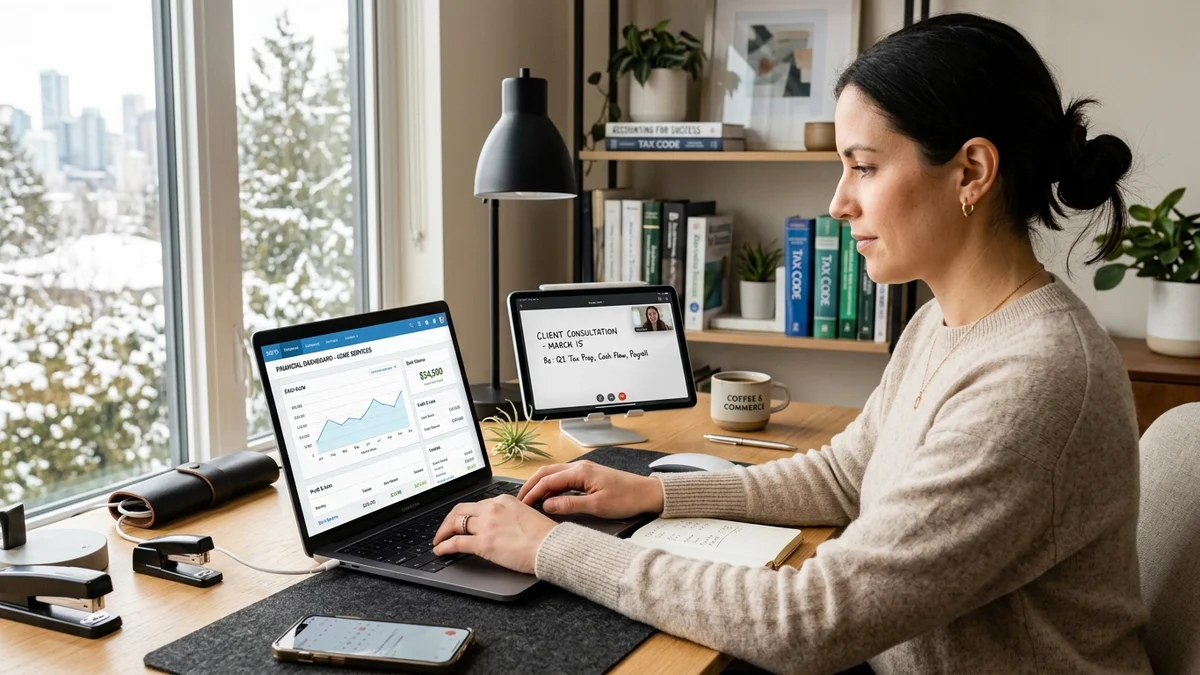
Embaucher un Aide-Comptable à Distance ou Utiliser un Logiciel Comptable ?
Découvrez s'il est plus avantageux pour votre PME d'engager un aide-comptable virtuel ou d'utiliser un logiciel de comptabilité infonuagique.

Que Fait Concrètement un Aide-Comptable Virtuel ?
Découvrez le rôle quotidien, les responsabilités et la valeur ajoutée d'un spécialiste de la tenue de livres en ligne pour votre entreprise.